
Champaign IL: How Local Partnerships Boost Capacity for Inclusive Communications
As home to a Big Ten university and major farming operations, central Illinois’ Champaign County attracts people from all over the world, including international students and agricultural workers. This vibrant newcomer community made Champaign one of only nine Illinois counties with a growing population between 2010 and 2019.
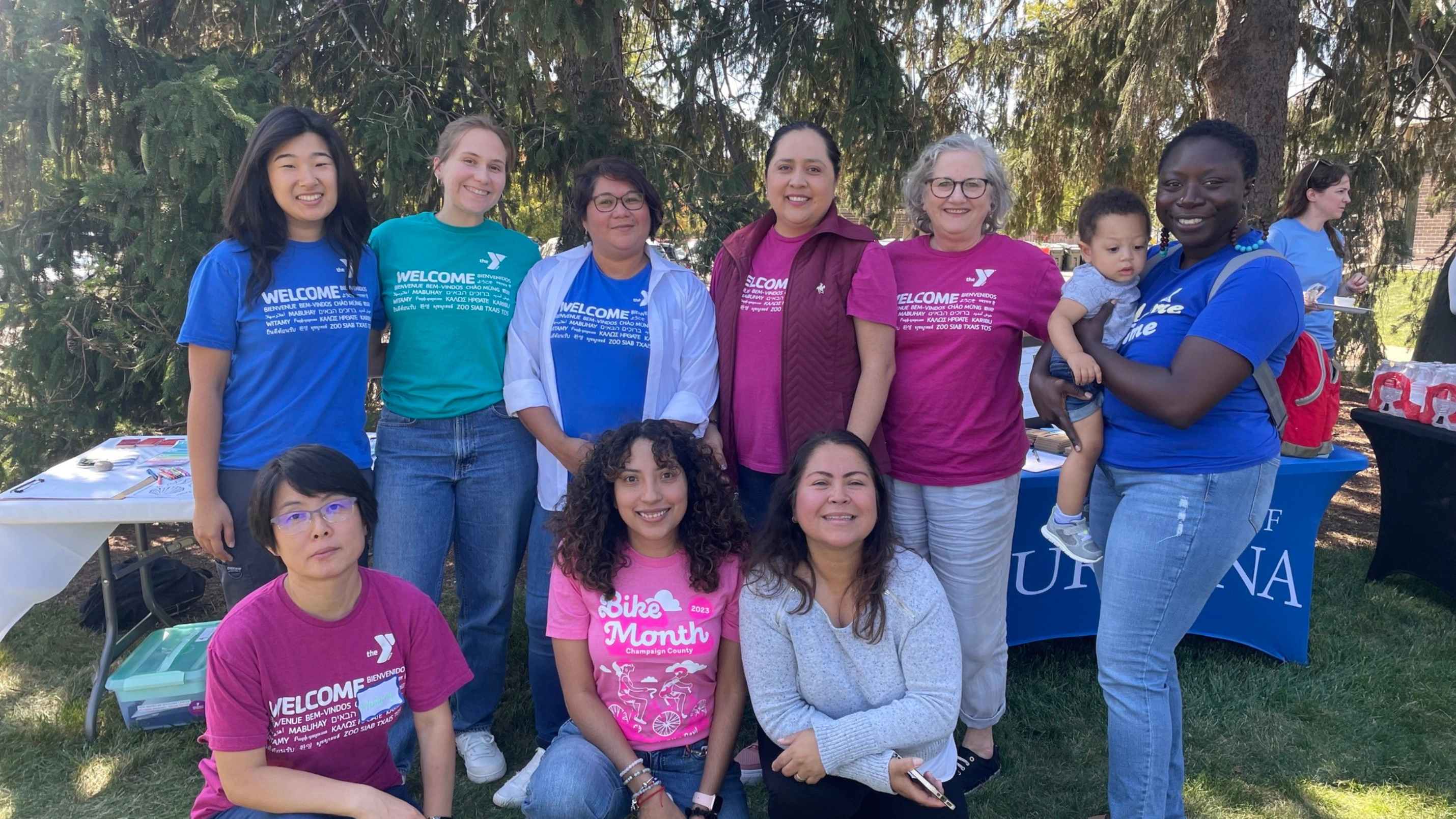
The local government, including the “twin cities” of Champaign and Urbana, has leveraged strategic partnerships to support newcomer communities and build inclusive communications resources.
Yet the community didn’t always have robust capacity for welcoming.
“Like other micro-urban areas with an emerging immigrant population, Champaign County lacked the historical immigrant welcoming infrastructure that exists in large urban cities,” as noted in the Champaign County Welcoming Plan.
For years, the county’s welcoming efforts were driven by informal relationships between local residents and nonprofits. In 2009, the C-U Immigration Forum began coordinating dialogue with cross-sector stakeholders to strengthen resources and foster public-private partnerships.
“Built on grassroots organizing, the group worked with stakeholders to develop strategies and dialogue around what’s next,” said Rachel Joy, who now serves as Chief Equity Officer for the City of Champaign.
Community dialogue led to concrete actions: In 2017, the local University YMCA launched the New American Welcome Center (NAWC), providing a physical space for welcoming. In 2018, the NAWC and other groups—including the City of Champaign, City of Urbana, University of Illinois, and Champaign County Economic Development Corporation—successfully applied to Gateways for Growth, a program that connects local communities with research and technical assistance to support newcomer inclusion, coordinated by Welcoming America and the American Immigration Council.
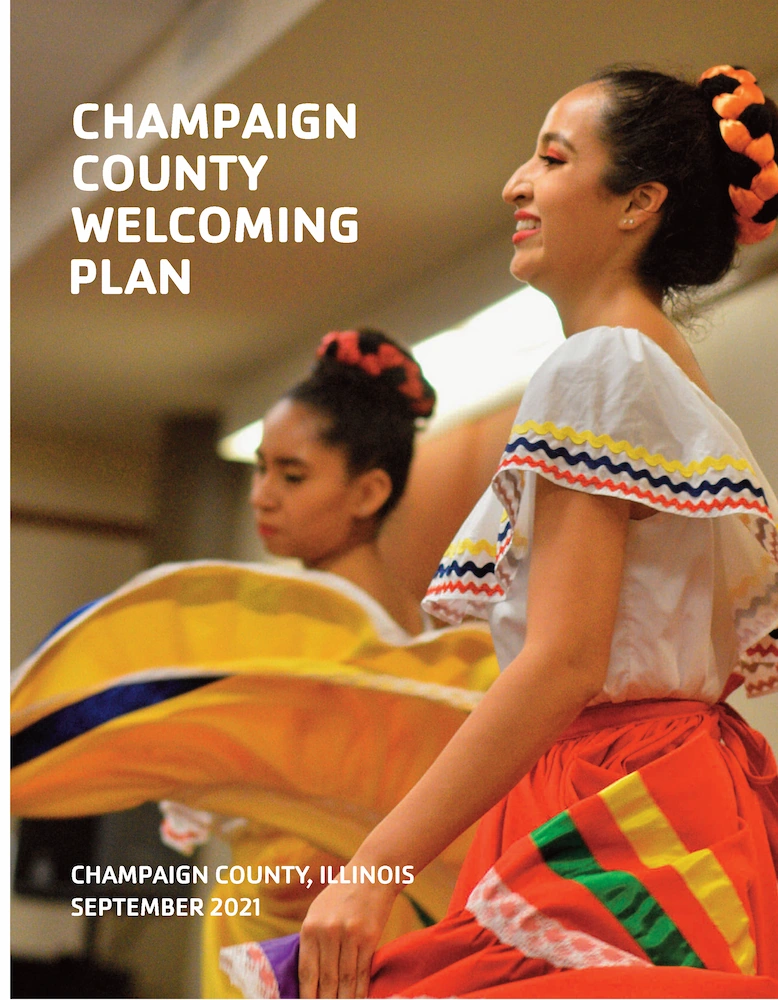
The events set the stage for the Champaign County Welcoming Plan, which convened an even wider swath of city agencies and nonprofits in creating goals around newcomer economic integration, civic engagement, health, education, language, and public safety. But before the plan’s completion, the COVID-19 pandemic tested the infrastructure for inclusive communications.
The City of Champaign developed a public health campaign to encourage mask-wearing in accordance with public health guidelines. City leaders engaged community partners to develop accurate and culturally relevant materials. The campaign included content in English, Spanish, French, and Q'anjob'al, a Mayan language spoken in Guatemala and Mexico—along with 700 people in Champaign County.
To reach community members, city leaders used the NAWC’s network of Community Navigators— newcomers from Latino, Korean, Chinese, and Congolese, and Mayan communities trained to help others access local resources.
“We were all tested during the pandemic, and our community met the challenge. The collaboration during COVID-19 outreach was key in building a new layer of trust between local government, resource providers, and residents. Beyond a successful public health campaign, it was a display of what true welcoming and inclusion look like,” said Joy.
In 2021, Champaign County released its Welcoming Plan, and in 2022, the City of Champaign launched its Equity and Engagement Department, led by Joy. The department staff, including a Community Relations Manager and Specialist, continue to implement the Welcoming Plan and participate in county-wide Communities of Practice that meet regularly and continue cross-sector collaboration.
In 2023, the City of Champaign earned Certified Welcoming status, a recognition of the city’s strong capacity built through its partnerships.
“We collect data, build processes, fund initiatives and strengthen collaborative efforts. But what matters most is that when you enter our community you can feel something: The feeling you get when you know you belong. That’s what we do well in our community, and that is the power built through our partnerships,” said Joy.
Explore tools for inclusive communications:
As local governments and organizations serve growing numbers of multilingual audiences, many are using communication strategies that promote trust, engagement, and access.
Read More