
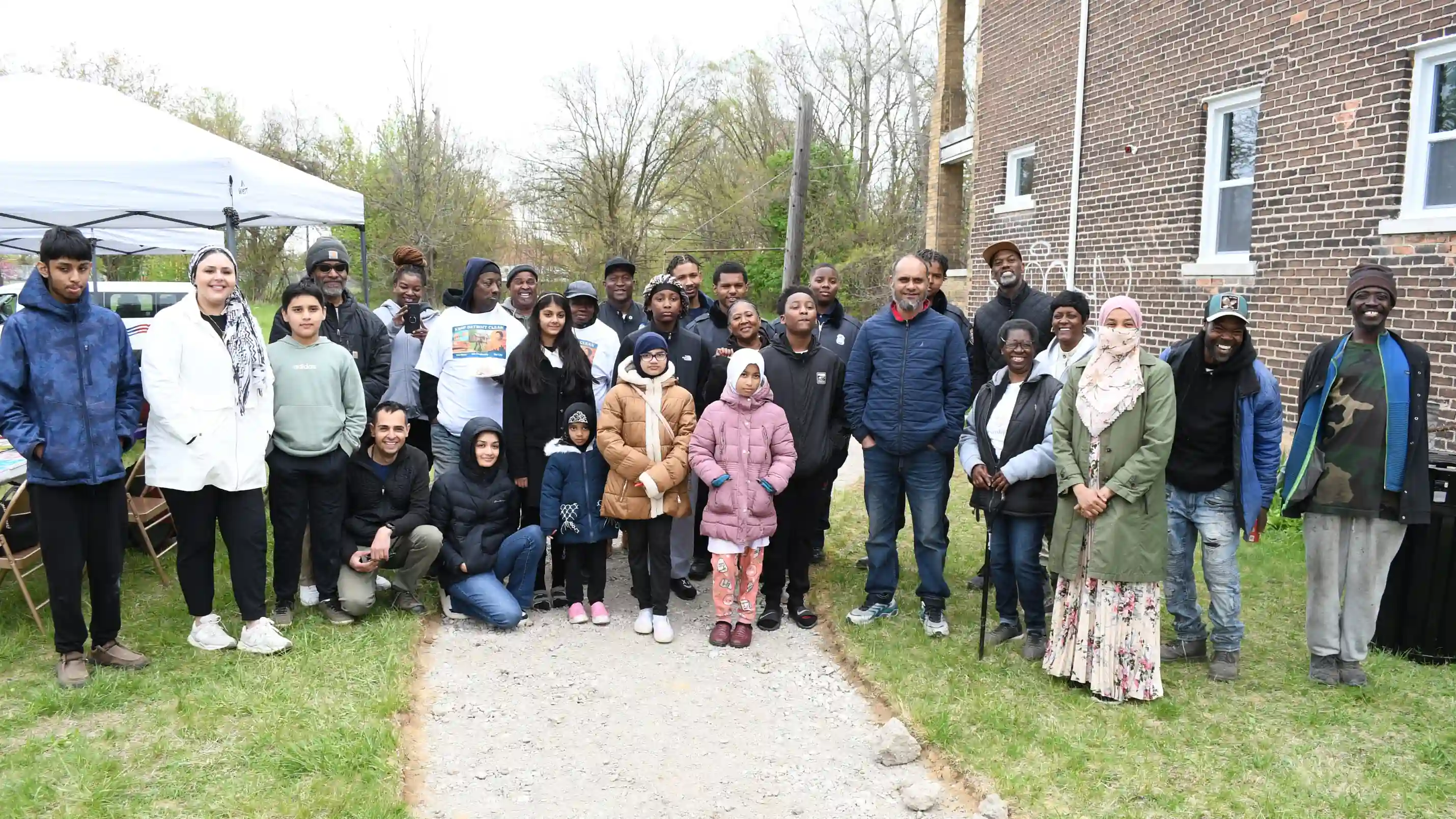
How Detroit Neighbors Turned a Vacant Lot Into Common Ground
We talk a lot about bringing people together. But what does that actually look like?
There’s a science behind it: contact theory. Developed by social psychologist Dr. Gordon Allport, contact theory describes the conditions that support people in building connections across differences.
Here’s the basic idea: if you know, work alongside, and do something meaningful with someone, you’re more likely to understand their perspective and see their humanity.
This matters for welcomers everywhere. We can intentionally cultivate belonging and connection — which makes it possible for everyone to participate and prosper in our communities.
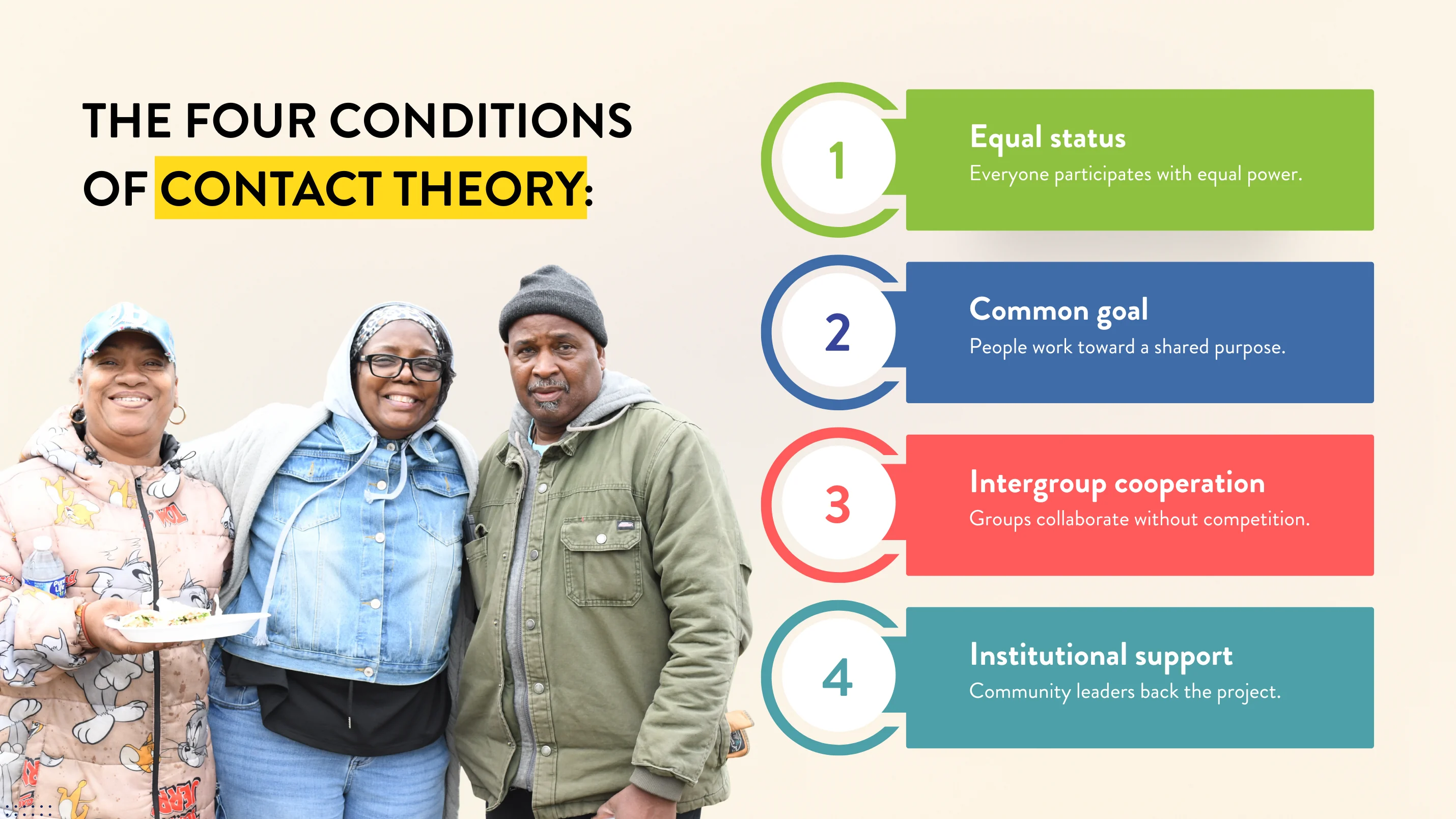
In Detroit, these four conditions came together in a cohesive way. In the neighborhoods of Banglatown and East Davison Village, contact theory reduced anti-Black and anti-immigrant biases among neighbors.
Here's how it worked.
Working together with equal status
Global Detroit facilitated the project so everyone could participate on equal footing.
They considered everyone's needs, including cultural ones. That meant halal meat options, no alcohol at meetings, and meeting spaces that felt safe and neutral.
They set a regular meeting time that worked for neighbors’ schedules. Meetings were held near people's homes, accessible by public transit, with a virtual option too. Even if people couldn’t attend, they could access notes or join office hours to stay in the loop.
Sharing a common goal
Bangladeshi, Yemeni, and Black residents wanted to pursue a project that symbolized their shared commitment to safety, inclusion, and wellness.
Their goal? Make the neighborhood more safe, beautiful and welcoming by reclaiming a vacant lot.
Cooperating within and across groups
To create a truly welcoming space for people to participate, the facilitators had to create an environment for people to come together without judgment or competition.
At first, most participants hesitated to share personal experiences or talk about community challenges. To build trust and break down walls, they hosted cultural celebrations, community clean-ups, and a youth-led community conference. Each event created opportunities for residents to share more about themselves and their culture.
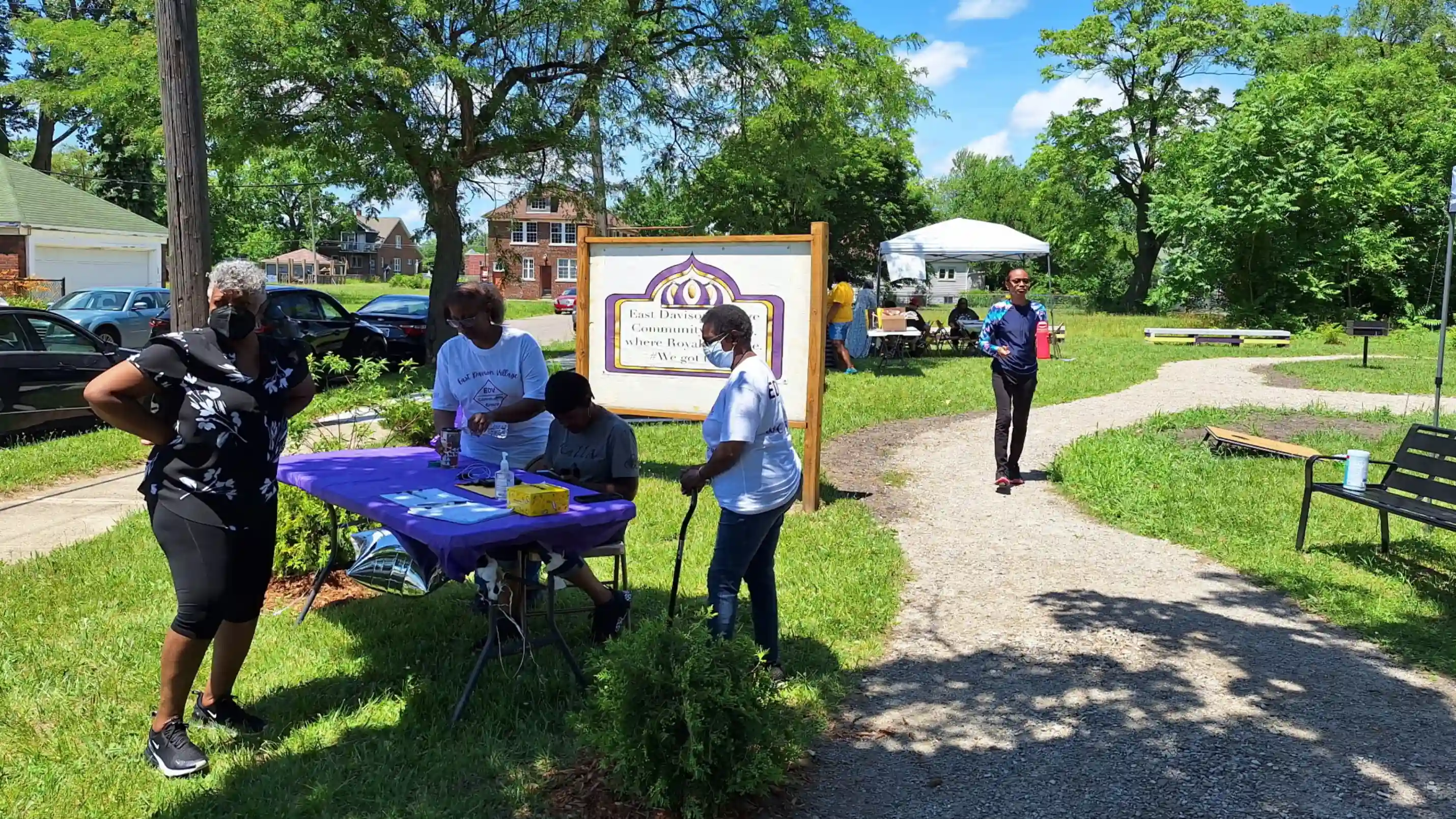
Support from local leaders
Global Detroit catalyzed support for these groups to work together. They established committees, helped residents research community resources, and supported them in navigating local policies that impacted meeting spaces and site reclamation plans.
As the vacant lot reclamation moved forward, residents began acting as community representatives in planning discussions with local schools and libraries.
Global Detroit didn’t guide from the outside. Instead, they helped residents outline a clear plan to make sure these neighbors were the true owners and managers of the project.
The outcome? A more connected neighborhood
What started as two neighborhoods divided by cultural differences became a united group solving challenges everyone faced.
New friendships formed organically. And the words people used started shifting. Rather than talking about “us” vs. “them,” people shifted to saying “we.”
Now, 80% of the participating neighbors know more people of different backgrounds.
One longtime Black resident reflected on how the project changed their assumptions and made them feel included:
"I thought that they did not want to coexist/interact with us in the East Davison community. But this program has allowed me to meet more and more people and realize that it is not that way at all. They could have put their guard up; instead, this experience lowered the walls some. If we can get more people involved, it will help to bridge the gap between the different groups."
To learn more about contact theory in action:
- Check out the Welcoming Standard. All of the frameworks — especially Civic Engagement, Connected Communities, and Government & Community Leadership — offer policy and program ideas that can be the shared goal of a bridge-building project.
- Watch our recent webinar for deeper insights.
- Explore Global Detroit’s report: Contact Theory as a Tool for Cultivating Social Cohesion.
Become A Member
Join the Welcoming Network to become a more welcoming place.